
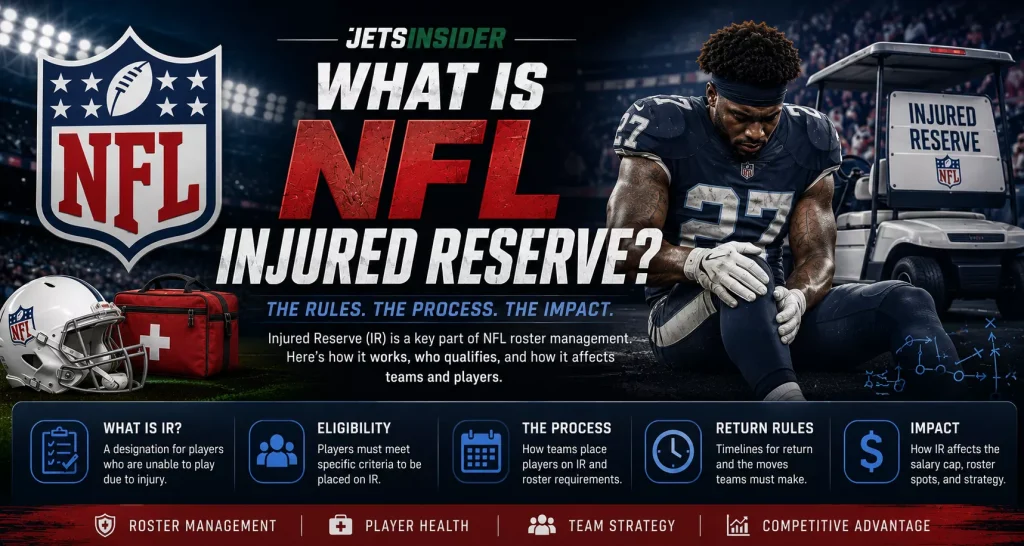
NFL injured reserve (IR) is a roster list for players with injuries serious enough to keep them out of games. A player moved to IR comes off the 53-man active roster but stays under contract and is paid. Under current rules, a player placed on IR with a designation to return must miss at least four games before he can play again.
When a New York Jets player lands on IR, it reshapes the depth chart for weeks. This guide explains how injured reserve works, how the “designated to return” rule affects a comeback timeline, and how it fits alongside the PUP and NFI lists. For the latest Jets injuries, see our Jets Injury Report hub.
What does injured reserve mean in the NFL?
Injured reserve is a reserve list for players whose injuries prevent them from playing. Placing a player on IR removes him from the active roster so the team can sign a healthy replacement, while the injured player keeps his salary and contract status. It is the league’s mechanism for managing significant injuries without simply releasing the player.
There are two ways a player reaches IR, and the timing determines whether he can return:
- Before the 53-man roster is set: a player placed on IR at initial cutdown is generally out for the season — though a 2025 rule change lets each team bring back up to two of these players.
- After the 53-man roster is set: a player can be placed on IR and later “designated to return,” keeping a path back to the field.
How long does a player stay on injured reserve?
A player designated to return must miss a minimum of four games. After that point the team may open his practice window; if he is never activated, or if he was placed on season-ending IR, he stays on the list for the rest of the year.
What is the “designated to return” rule?
The designated-to-return tag is what keeps an IR stint from ending a player’s season. Once a player has served his four-game minimum and the team opens his 21-day practice window, he can rejoin practice. Within those 21 days, he must be activated to the 53-man roster, or he reverts to season-ending IR. A single player can be designated to return twice in the same season.
How many players can a team bring back from IR?
Under current NFL rules, a team may designate up to eight players to return from injured reserve during the regular season. The 2025 update added flexibility at roster cutdown, allowing teams to designate up to two players for return even when they were placed on IR as the roster trimmed to 53.
How do IR, PUP, and NFI differ?
All three lists keep an unavailable player off the active roster, but they apply to different situations. IR is for in-season injuries after a player makes the team, the PUP list is for players hurt in their own team’s football activities who have not practiced, and the NFI list covers injuries or illnesses that occur away from football. Reserve/PUP and reserve/NFI players, like IR-return players, must miss at least the first four games.
How do the Jets use injured reserve?
For the Jets, IR is a week-to-week roster tool: a significant injury to a starter often means an IR move and a call-up from the practice squad or a free-agent signing. Those moves also carry cap implications — see how that works in our explainer on how the NFL salary cap works. Track every Jets roster change through our Jets roster hub.
Frequently asked questions about NFL injured reserve
What does injured reserve mean in the NFL?
Injured reserve (IR) is a special roster list for players who are too hurt to play. A player on IR is removed from the 53-man active roster and cannot practice or play until he is activated, but he stays under contract and is paid. Moving a player to IR frees an active roster spot for a healthy replacement.
How many games must a player miss on injured reserve?
A player placed on IR with a designation to return must sit out a minimum of four games before he is eligible to play again. If a player is placed on season-ending IR, he is out for the remainder of the year.
Can a player come back from injured reserve?
Yes, if he is ‘designated to return.’ Once eligible, the team can open a 21-day practice window; within those 21 days the player must be added to the active roster or he reverts to season-ending IR. Under current rules, a single player can be designated to return twice in a season.
How many players can a team activate from IR?
Under current NFL rules, a team may designate up to eight players to return from injured reserve during the regular season. A 2025 update also lets teams bring back up to two players who were placed on IR at the initial cutdown to 53.
What is the difference between IR, PUP, and NFI?
IR is for injuries that occur after a player has made the roster. The PUP (Physically Unable to Perform) list is for players hurt in their own team’s football activities who have not practiced, while NFI (Non-Football Injury) covers injuries or illnesses that happen away from the team. Reserve/PUP and reserve/NFI players also miss at least the first four games.
Latest Jets Injury News
Injury reports, IR designations and return timelines, newest first.

Omar Cooper Jr. Expected to Play at New England in First Game Since Week 1
Omar Cooper Jr. is in line to play his first NFL game since September. The Jets’ first-round rookie receiver practiced fully Friday, is questionable…
Jets Open Omar Cooper Jr.’s 21-Day Practice Window After High Ankle Sprain
Update, October 17, 2026: Cooper was a full participant at Friday’s practice and is listed as questionable on the Jets’ final Week 6 injury…
Kenyon Sadiq in Concussion Protocol After Fumble in Jets’ Win Over Browns
Rookie tight end Kenyon Sadiq is in the NFL concussion protocol after leaving the Jets’ 17-12 win over Cleveland. No return timeline yet.